
Every day, billions of spam messages circulate across the internet, ranging from harmless advertisements to dangerous phishing attempts and malware campaigns. This is where email spam filtering becomes essential. Spam filtering acts as a protective layer that examines incoming emails and decides whether they should reach the inbox, be flagged as suspicious, or be blocked entirely. Modern systems rely on multiple spam filtering techniques, including reputation analysis, content inspection, authentication checks, and machine learning.
Understanding how these filters work is important for both organizations and marketers. It helps improve email security, protect users from scams, and ensure legitimate emails reach their intended recipients instead of getting lost in the spam folder.
What is Email Spam Filtering
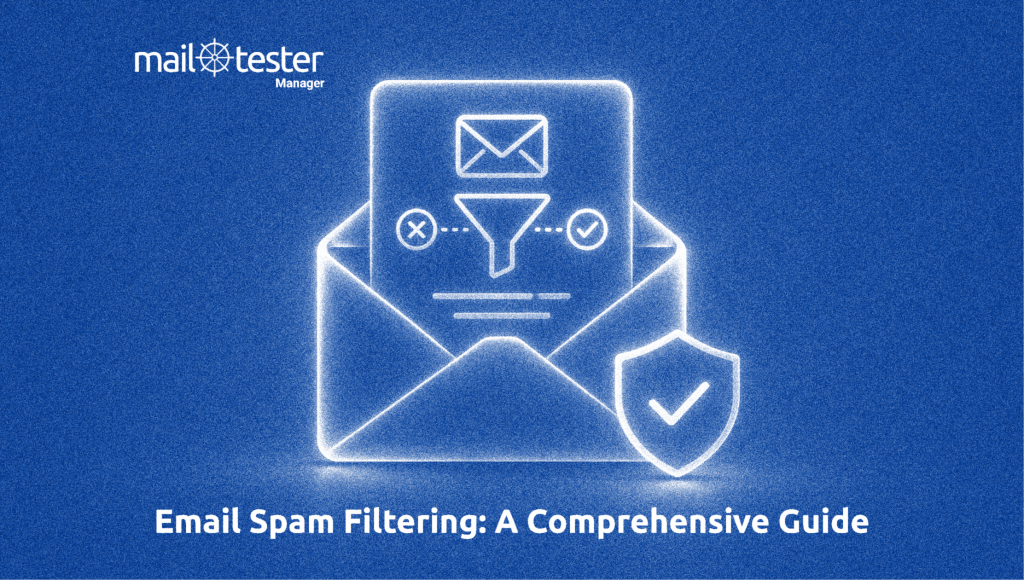
Email spam filtering is the process of identifying and blocking unwanted or suspicious email messages before they reach a user’s inbox. In simple terms, it acts like a security checkpoint that examines every incoming email and decides whether it should be delivered, moved to the spam folder, or rejected completely.
When an email arrives, the filtering system evaluates different signals. It may consider the sender’s reputation, the message’s content, the presence of suspicious links or attachments, and authentication checks associated with the domain. If the email matches patterns commonly associated with spam or malicious activity, it is flagged and handled accordingly.
Most spam filters work automatically and in real time, which means users rarely notice the filtering process happening in the background. This automated screening helps keep inboxes organized and prevents users from being overwhelmed by irrelevant or harmful messages.
Without spam filtering, inboxes would quickly fill with advertisements, phishing attempts, scams, and potentially dangerous emails. Because email remains one of the most widely used communication channels, filtering has become an essential part of modern email security.
Why is Email Spam Filtering Important
Here are the main reasons why ESPs and companies rely on email spam filtering:
Protects Users from Phishing, Malware, and Scams
Many cyberattacks begin with a single email. Attackers often send messages containing malicious links, fake login pages, or infected attachments designed to steal credentials or install malware.
Spam filtering helps prevent these attacks by identifying suspicious messages before they reach the user. Advanced filtering systems can scan attachments, evaluate links, and compare messages against known threat databases to detect potential risks.
Helps Maintain Inbox Quality and Productivity
A cluttered inbox makes it difficult to find important messages. Spam filtering reduces unnecessary noise by blocking promotional spam, suspicious messages, and automated junk mail. By keeping inboxes cleaner, users can focus on legitimate communication and respond to important emails more efficiently.
Supports Email Security for Organizations
Spam filtering also plays a major role in protecting businesses. Organizations often receive thousands of emails each day, creating opportunities for phishing campaigns and impersonation attempts. Filtering systems help detect suspicious activity, prevent harmful emails from reaching employees, and reduce the risk of data breaches or financial fraud.
Improves Trust in Email Communication
When users repeatedly receive spam or malicious messages, they begin to distrust email. Effective filtering improves email reliability by ensuring that most messages reaching the inbox are legitimate. This helps maintain trust between businesses, customers, and partners, making email a safer and more dependable communication channel.
How Email Spam Filtering Evolved Over the Years
Spam filtering has evolved significantly as the volume and sophistication of spam have increased. In the early days of the internet in the mid-1990s, spam was relatively limited, but it quickly became widespread as email usage grew. By 2000, spam accounted for about 8–10% of global email traffic, and by 2006–2009 it had surged to around 86–90%, forcing the development of more advanced filtering technologies.
The first generation of spam filters relied on simple rule-based systems, which scanned emails for suspicious keywords or patterns. Tools such as Apache SpamAssassin, launched in 2001, became widely used because they applied hundreds of tests and scoring techniques to determine whether a message was likely spam.
As spammers adapted, filtering systems evolved to use Bayesian and machine-learning techniques that could learn from previous emails and detect more subtle patterns. Modern email providers now combine reputation analysis, behavioral signals, and AI-based detection.
Despite these improvements, the scale of the problem remains huge. Today, around 45–47% of global email traffic is still spam, and services like Google reportedly block about 100 million phishing emails every day using advanced filtering technologies.
Types of Email Spam Filters
Modern email spam filtering does not rely on a single method. Instead, email systems use multiple layers of detection to identify suspicious messages. Each method analyzes a different aspect of an email, such as the content, sender reputation, or sending behavior. By combining several spam filtering techniques, email providers can detect a wide range of threats while still allowing legitimate emails to reach the inbox.
Content-Based Filtering
Content-based filtering examines the actual text and structure of an email. This method scans the subject line, message body, attachments, and formatting to identify patterns commonly associated with spam.
For example, emails that use aggressive promotional language, such as “Buy now” or “Act fast,” may trigger a warning signal. Messages written in excessive capital letters or filled with repeated exclamation marks may also be flagged. Some filters also detect suspicious attachments or emails that contain only images without supporting text.
If an email shows several of these patterns, the system may classify it as spam and redirect it to the spam folder.
Blocklists and Allowlists
Reputation-based filtering relies on trusted and untrusted sender lists. These lists help spam filters for email quickly decide whether a message should be accepted or blocked.
Blocklists contain domains and IP addresses known to send spam. Organizations such as Spamhaus and Barracuda maintain widely used databases of these sources. If an email server appears on one of these lists, many providers automatically reject messages from it.
Allowlists work in the opposite way. They contain trusted senders whose messages are always allowed to reach the inbox.
Bayesian Filtering
Bayesian filtering uses statistical analysis and machine learning to identify spam patterns. Instead of relying only on fixed rules, this system learns from previous emails.
Over time, it analyzes the words, headers, and metadata in messages to understand what spam and legitimate emails look like. When users mark emails as spam or not spam, the system updates its internal model and improves its detection accuracy. This learning process allows spam filters to adapt to new spam tactics as they appear.
Rule-Based Filtering
Rule-based filtering uses predefined conditions created by administrators or users. These rules instruct the email system how to handle certain types of messages.
For instance, a rule may block emails containing specific keywords, suspicious file types (such as executable attachments), or messages from unknown domains. Corporate email systems often use these rules to filter internal traffic or restrict risky attachments.
Because the rules are customizable, organizations can tailor the filtering system to match their security policies.
Heuristic Filtering
Heuristic filtering assigns a score to an email based on multiple warning signals. Each suspicious element adds points to the message’s spam score. For example, an email that includes several external links, generic greetings such as “Dear customer,” and unusual formatting may accumulate a high score. If the score crosses a predefined threshold, the message is classified as spam.
This scoring approach helps identify messages that may look harmless individually but become suspicious when several indicators appear together.
DNS-Based Filtering
DNS-based filtering checks whether the sender’s IP address appears on a real time blocklist. These blocklists are constantly updated with addresses reported for sending spam or malicious emails.
When a message arrives, the receiving server quickly queries the DNS based blocklist. If the sender’s IP is listed, the email may be rejected or redirected to the spam folder. Common blocklist providers include Spamhaus, SORBS, and Spamcop. These services help email providers stop large volumes of spam before the messages even reach the inbox.
Advanced Spam Filtering Tools and Techniques
Basic spam filtering methods, such as keyword checks and blocklists, are effective, but modern email security requires more advanced techniques. Cybercriminals constantly change their tactics, which means email systems must rely on stronger verification methods and intelligent detection tools. The following technologies help improve email spam filtering by verifying sender identity, analyzing patterns, and detecting suspicious behavior before messages reach the inbox.
SPF, DKIM, and DMARC Authentication
One of the most important techniques used by modern spam filters is email authentication. Authentication protocols help receiving mail servers verify whether an email truly comes from the domain it claims to represent. The three main protocols used for this purpose are SPF, DKIM, and DMARC.
- SPF (Sender Policy Framework) verifies which mail servers are allowed to send emails on behalf of a domain. Domain owners publish an SPF record in their DNS settings that lists authorized sending IP addresses. When an email is received, the server checks this record to confirm whether the sending server is permitted. If the IP address is not listed, the email may be flagged as suspicious or rejected.
- DKIM (DomainKeys Identified Mail) adds a digital signature to each email. This signature allows receiving servers to verify that the message has not been altered during transmission. It also confirms that the email is genuinely associated with the sending domain. If the signature cannot be verified, spam filters may treat the email as potentially unsafe.
- DMARC (Domain-based Message Authentication, Reporting and Conformance) builds on SPF and DKIM by enforcing alignment between these authentication checks and the visible sender domain. DMARC also allows domain owners to set policies that instruct receiving servers on how to handle failed authentication. For example, a domain owner can request that failing emails be quarantined or rejected. DMARC also provides detailed reports that help organizations monitor authentication results and detect spoofing attempts.
Correctly configuring these protocols significantly improves domain credibility and reduces the chances of legitimate emails being marked as spam. Tools such as EasyDMARC’s SPF Record Generator, DKIM Record Generator, and DMARC Record Generator help domain owners create accurate DNS records quickly and avoid configuration errors.
SpamAssassin
SpamAssassin is a widely used open-source spam-filtering tool that evaluates emails using a scoring system. It performs multiple checks on each message, including header analysis, keyword detection, and DNS blocklist lookups.
Each suspicious signal adds points to a message’s spam score. If the score crosses a predefined threshold, the system classifies the email as spam. Because SpamAssassin uses hundreds of different tests, it is capable of identifying many common spam patterns.
Machine Learning and AI-Based Filtering
Modern email providers increasingly rely on artificial intelligence to improve email spam filtering. Machine learning systems analyze massive amounts of email data to identify patterns associated with spam, phishing, and malware campaigns.
These systems learn continuously from new messages and user feedback. As a result, they can detect emerging threats that may not yet appear on blocklists or traditional rule-based systems.
Greylisting
Greylisting is another technique used to reduce spam from unknown senders. When a server receives an email from an unfamiliar source, it temporarily rejects it rather than accepting it immediately.
Legitimate mail servers usually retry delivery after a short delay, following standard email protocols. Many spam servers, however, do not attempt to resend the message. Because of this behavior difference, greylisting can effectively block large volumes of automated spam while still allowing legitimate emails to be delivered.
Best Practices to Avoid Spam Filters and Improve Deliverability
Maintaining strong email deliverability and avoiding spam classification requires careful management of your sending infrastructure. Email providers rely heavily on authentication signals, sender reputation, and sending behavior when evaluating messages. Following a few essential best practices can significantly improve email spam filtering outcomes and help ensure that legitimate emails reach the inbox.
Configure SPF, DKIM, and DMARC Correctly
Misconfigured authentication records are one of the most common reasons legitimate emails are flagged by spam filters. To avoid this, administrators should regularly verify their DNS records. Tools such as EasyDMARC’s SPF Lookup, DKIM Lookup, and DMARC Lookup tools allow users to quickly check whether their authentication records are correctly published and functioning as expected.
Monitor Sender Reputation and Email Performance
Email systems closely track sending behavior to determine trustworthiness. Marketers and administrators should continuously monitor bounce rates, spam complaints, and blocklist status. Sudden spikes in complaints or failed deliveries can quickly damage a domain’s reputation and increase the chances of messages being filtered.
Platforms such as MXToolbox, Mail Tester, and Google Postmaster Tools provide useful insights into sender health and help identify potential issues before they affect deliverability.
Use Secure and Reliable Sending Infrastructure
Using a dedicated SMTP IP address is recommended for organizations that send large volumes of email. This ensures that your sender reputation is not affected by other senders sharing the same infrastructure.
In addition, emails should always be transmitted over TLS encryption. Secure transmission protects message data during delivery and strengthens the signals modern spam filters use to detect spam.
Final Thoughts
Spam will continue to be a challenge as long as email remains a major way people communicate online. Attackers are constantly finding new ways to bypass protections, using more convincing phishing emails, fake domains, and automated tools to send large volumes of messages. Because of this, email spam filtering will need to keep improving to keep up with these changing threats.
In the coming years, stronger authentication and smarter detection systems will play an even bigger role. Protocols like SPF, DKIM, and DMARC will remain essential for proving that an email truly comes from the domain it claims to represent. At the same time, modern spam filtering systems that use machine learning will continue getting better at identifying suspicious patterns.
For organizations and email senders, the key focus should be on maintaining good sending practices, monitoring their email infrastructure, and adopting reliable security measures to keep communication safe and trustworthy.