
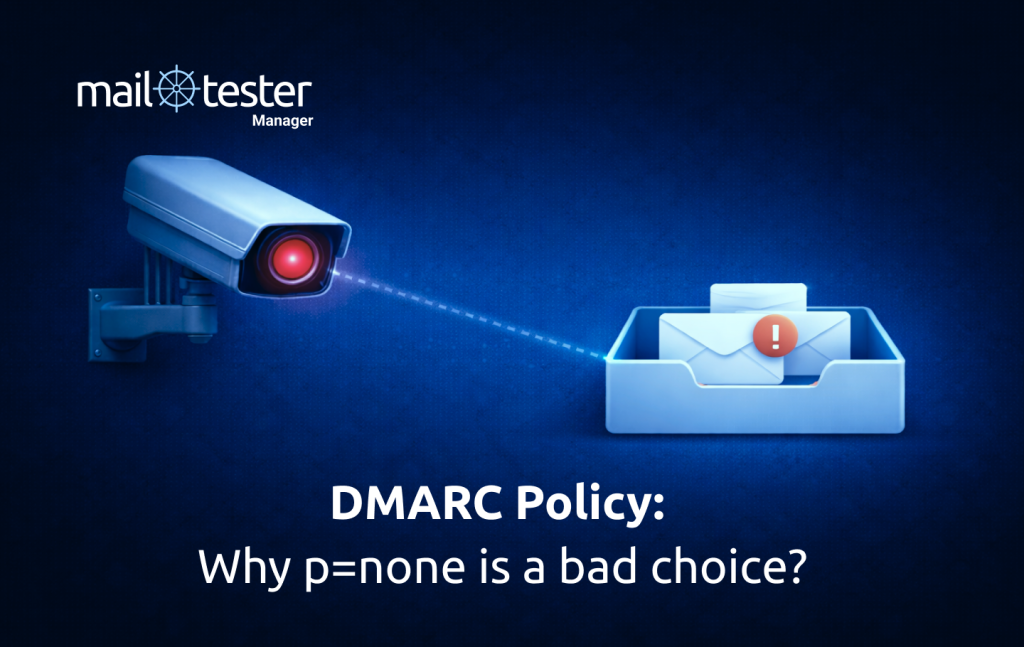
A DMARC policy tells receiving mail servers what action to take if an email fails these checks. Many organizations begin their deployment with DMARC p=none, which allows them to monitor email activity and receive reports without affecting message delivery. However, a common mistake is staying in this monitoring mode for too long. When a domain remains in DMARC p=none, unauthenticated emails can still reach recipients, leaving the domain vulnerable to spoofing and phishing.
In this article, we’ll explain what DMARC p=none actually does, why relying on it long-term can be risky, and how organizations can move toward stronger DMARC policy options for better protection.
What DMARC p=none Actually Does
When a domain uses DMARC p=none, receiving mail servers do not block suspicious emails. Instead, they send DMARC reports to the domain owner showing which sources are sending emails and whether those messages pass SPF and DKIM authentication checks. These reports help organizations identify legitimate senders and detect unauthorized sources.
A key characteristic of the DMARC none policy is that it does not enforce any action on emails that fail authentication. Even if a message fails DMARC checks, it can still be delivered to the recipient’s inbox because the receiving server has not been instructed to quarantine or reject it.
Why is p=none Often Misunderstood?
Many organizations assume that implementing DMARC p=none automatically protects their domain from spoofing and phishing attacks. This misunderstanding usually happens because simply publishing a DMARC record feels like a security step forward. However, the policy does not actually block or filter suspicious emails. It only allows domain owners to monitor email activity through DMARC reports.
When a domain uses p=none, receiving mail servers still deliver emails even if they fail DMARC authentication checks. In other words, attackers can continue sending spoofed emails that appear to come from the domain, and those messages may still reach users’ inboxes. The domain owner receives reports on these activities only after the emails have already been processed.
Because of this, DMARC p=none should mainly be treated as a monitoring stage during the early phases of DMARC deployment. Its real purpose is to help organizations identify legitimate email sources, analyze authentication failures, and fix configuration issues before moving to stronger enforcement policies like quarantine or reject.
Why DMARC p=none is a Bad Choice
While DMARC p=none is useful during the initial stages of email authentication setup, keeping this policy for a long time can create serious security risks. Because it only monitors email activity and does not enforce any action on suspicious messages, your domain remains exposed to different types of abuse.
Domain spoofing remains possible
When a domain uses p=none, attackers can still send emails that appear to come from your domain. Even if those emails fail authentication checks, they may still be delivered because the policy does not instruct receiving servers to block them. So, even if those emails fail DMARC checks, they may still reach recipients, making it easier for bad actors to misuse your domain identity.
Phishing attacks become easier
Because suspicious emails are not stopped, attackers can use your domain name to send convincing phishing messages. These emails may look legitimate to recipients, especially if they contain familiar branding or sender details. This increases the likelihood that users will trust the message and click on malicious links or share sensitive information.
Brand reputation damage
When customers, partners, or employees receive fraudulent emails that appear to come from your organization, it can damage trust in your brand. Even if the emails were not actually sent by your company, recipients may still associate the incident with your domain, which can negatively affect credibility and long-term relationships.
Missing out on real protection
DMARC was designed to give domain owners control over how failed authentication emails are handled. The real protection comes from enforcement policies like quarantine or reject. If a domain remains in monitoring mode, it only observes email activity rather than actively preventing abuse or stopping malicious messages.
Compliance and security gaps
Many modern security frameworks and email security best practices encourage organizations to move toward enforced DMARC policies. Some partners, mailbox providers, and regulatory environments increasingly expect domains to implement stronger protections. Staying in monitoring mode may therefore create gaps in your overall email security posture and compliance readiness.
How to Move from p=none to Enforcement
The phased approach shared below helps ensure legitimate emails are not accidentally blocked while you strengthen your DMARC policy:
Start with p=none and Collect Reports
The first step is to publish a DMARC record with p=none and start collecting aggregate reports. You can use EasyDMARC’s XML Report Analyzer to understand which servers are sending emails on behalf of your domain and whether those messages pass SPF and DKIM authentication. This visibility helps you understand how your domain is actually being used for email.
Identify All Legitimate Email Senders
Next, review the reports to identify every system that sends emails using your domain. This may include your primary email provider, marketing platforms, CRM tools, support systems, or internal applications. The goal here is to make sure all legitimate sources are accounted for before any enforcement is applied.
Fix SPF and DKIM Alignment Issues
Once you know the legitimate senders, make sure their emails pass authentication correctly. This usually involves updating SPF records, enabling DKIM signing, or fixing alignment problems so emails meet DMARC requirements. Addressing these issues ensures legitimate messages will continue to be delivered successfully when enforcement begins.
Use our SPF Lookup and DKIM Lookup tools to see what exactly is wrong with your records.
Move to p=quarantine
After authentication issues are resolved, you can move to p=quarantine. With this policy, emails that fail DMARC checks are typically sent to the spam or junk folder instead of the inbox. For smaller organizations with a simple email setup, this transition can often happen within 3–5 days after reviewing reports and confirming legitimate senders.
Progress to p=reject
The final step is implementing p=reject, which instructs receiving servers to block emails that fail authentication. At this stage, spoofed emails are stopped before they reach recipients. Because you have already verified legitimate senders earlier in the process, the risk of blocking genuine emails becomes very low.
Following this gradual path allows organizations to strengthen email security step by step while maintaining normal email delivery.
Why Moving Beyond DMARC p=none Matters
While DMARC p=none is a useful starting point, it should only be treated as a temporary monitoring phase. Staying in this mode for too long leaves your domain open to spoofing and phishing attacks because failed emails are still allowed to reach recipients. The real strength of DMARC comes from enforcement policies such as quarantine and reject, which actively stop unauthorized messages from being delivered.
By gradually reviewing reports, identifying legitimate senders, and fixing authentication issues, organizations can safely move toward stronger protection. If managing DMARC enforcement feels complex, working with experts can make the transition much easier. EasyDMARC helps businesses monitor reports, identify risks, and confidently move from monitoring to full DMARC enforcement to protect their domain and email reputation.